
Art on the Altar
Engage the Senses
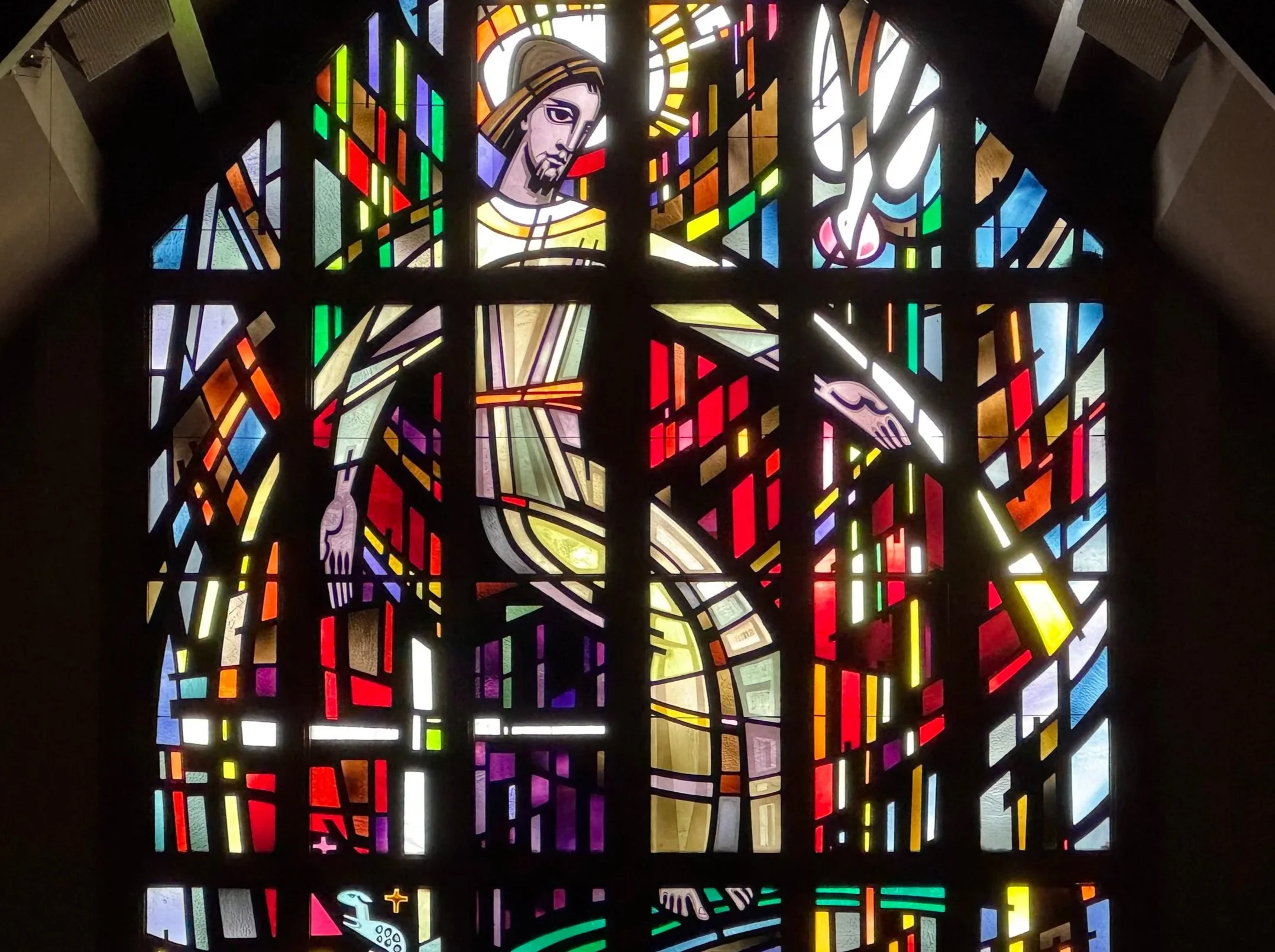
Worship invites more than words—it stirs sight, emotion, and spirit. Since January 2026, Trinity has featured original artwork by members, friends, and guests, displayed on the altar during services. Each piece reflects the worship calendar, enriching both the visual and spiritual experience. Learn more or get involved, email communications@trinityumbd.org.
-
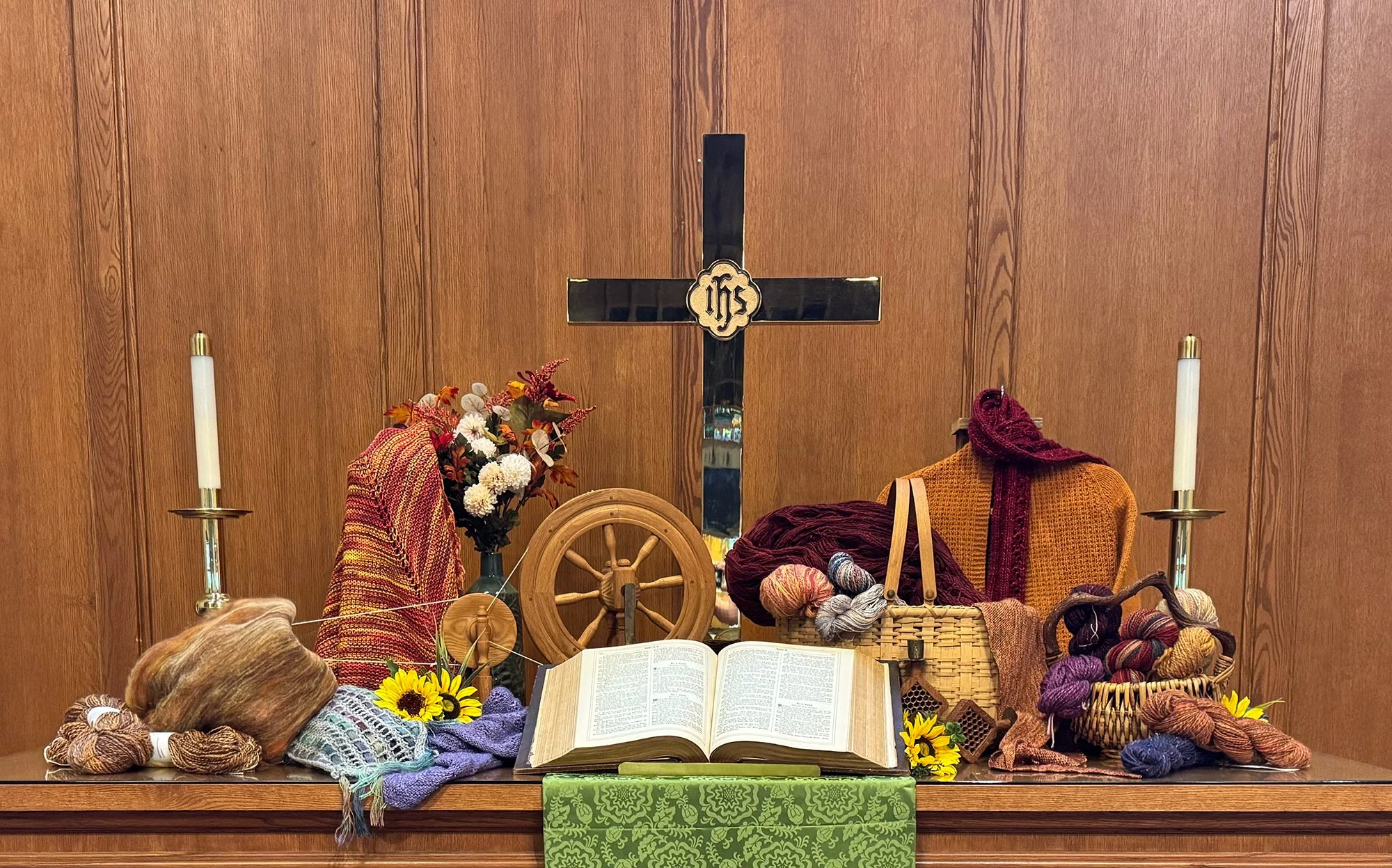
Currently Featured Artists: Sarah Cournoyer & Bee Hahn
Fiber art connects creativity, tradition, and craftsmanship—and each artist brings a unique story to the work. Sarah’s journey began with childhood memories of her mother’s sewing basket and grew into a lifelong practice of knitting and spinning. Bee’s love of spinning is rooted in a connection to the past, inspired by watching flax become linen in her small Ohio hometown. Explore their stories, discover their creative journeys, and learn more about the skill, patience, and passion behind their work below.
-
Sarah’s fiber journey began early, with some of her fondest memories involving the treasures in her mother’s sewing basket: spools of thread, bobbins, ribbon, pinking shears, and a measuring tape. When she was five, her great-aunt introduced her to crochet, knitting, and hand sewing. The crochet lessons stuck, becoming a craft Sarah returned to repeatedly through life’s ups and downs.
Wanting to make socks without finding any crochet patterns, she relearned knitting from a book. After struggling to knit dishcloths for a year, she realized she was holding the needles incorrectly. Once she corrected her technique in 2003, she quickly progressed to making socks, mittens, shawls, hats, and sweaters. Her patience and willingness to learn from mistakes truly paid off.
Sarah then turned her perseverance toward spinning—a skill that took ten years, three teachers, and countless attempts to master. Today, she has challenged herself to process a fleece entirely from sheep to finished project.
Sarah appreciates the fiber arts for teaching her patience, humility, and diligence. Knitting and spinning provide a mindful practice that brings her serenity, resilience, peace, and joy. She is grateful for the opportunity to share her work and thankful to create pieces that are both practical and beautiful.
-
Spinning is a connection to the past. It is also a very calming activity. When Bee was in middle school, her family lived in a small Ohio town called Winona. This little town, with three churches, a post office, and a butcher shop, held a festival called Flax Scutching. The town reenacted how to turn flax into linen. They raised a plot of flax every year, dried it, retted it, and then moved through the tools used to prepare it for spinning into thread. Bee’s favorite station was watching the women spin. She asked if they would teach her, but was told she was too modern. What did that mean?
Bee did learn to spin in 2000. In 2014, she and her family bought Babe’s Fiber Garden. One of her conditions was that they teach anyone who is interested.
In the Bible, when the temple was being built, it says to gather all the master craftsmen—not just the masons and woodworkers, but also the best spinners and weavers they had! It also mentions not wearing clothes made of two different fibers. It turns out that linen needs to be boiled and then ironed. If you boil wool, it will felt and shrink. As a spinner, Bee became aware of how to handle the fibers afterward.
Yes, Bee is a knitter, but only because bringing her spinning wheel to places is not always welcomed.


-
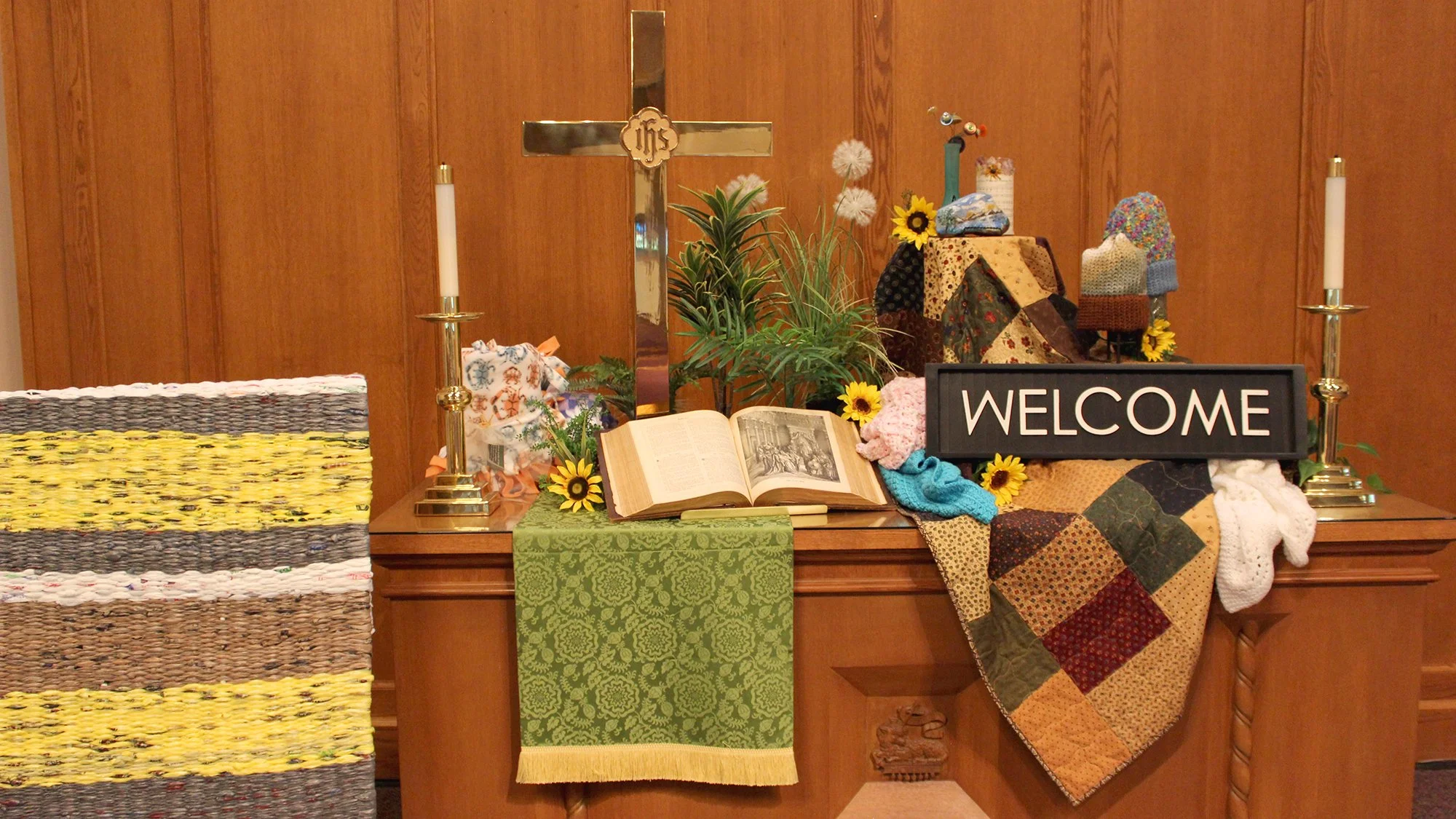
Cozy Crafters of Trinity Church
Since 2018, these talented and generous crafters have shared their time, creativity, and love to make items that bless people throughout the community. Every piece reflects countless hours of work and is made with love and a desire to serve others. As these creations are featured through Art on the Altar, take a moment to admire the craftsmanship and give thanks for the many hands and hearts behind this ministry.
To learn more about the Cozy Crafters, download the informational tri-fold brochure about the ministry.


-
Sally Cupery & Tammy Lind
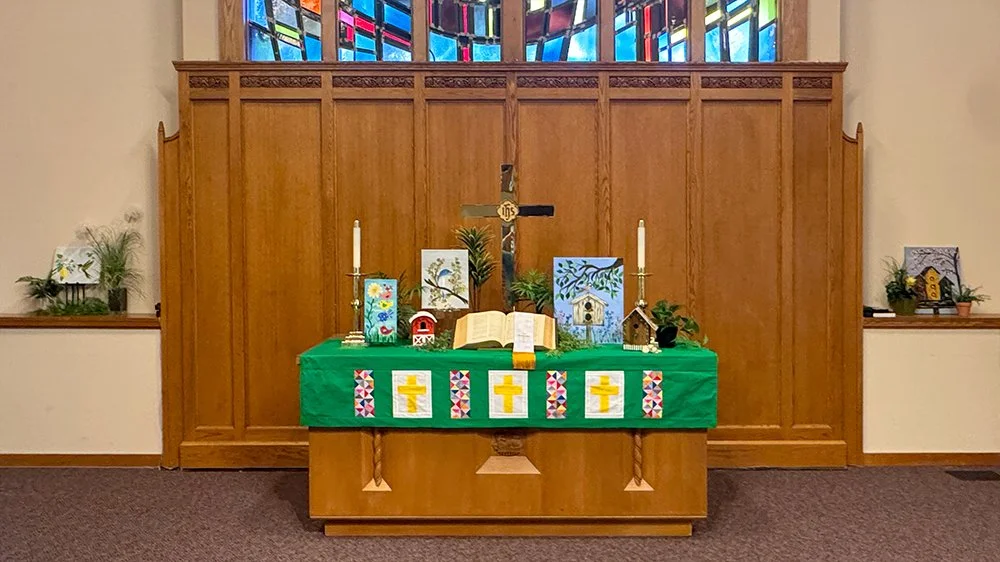
The green paraments by Tammy Lind are inspired by Trinity’s stained glass windows and symbolize the Holy Trinity. Also featured are acrylic paintings by Sally Cupery, whose nature-inspired artwork reflects her love of birds and flowers. Also included in the display is a handcrafted birdhouse built years ago by Wally Priewe using his signature license plate roof design. Learn more below.
-
Art has been a part of my life for as long as I can remember, though I only began painting with acrylics about five years ago. I draw much of my inspiration from nature, especially birds and flowers. Whether camping or traveling, I am always listening for birds and photographing the flowers we encounter along the way.
I am truly humbled by the opportunity to include a few of my paintings in "Art on the Altar." Most of my work is typically displayed only in my home, so I deeply appreciate the chance to share these pieces with others.
Additionally, one of the birdhouses featured in this display was built many years ago by Wally Priewe. He loved using old license plates as roofs for his birdhouses, and I am grateful that I still had one in good enough condition to include in this exhibit.
-
The paraments for the altar feature three crosses, signifying the Trinity: the Father, the Son, and the Holy Ghost. Inspiration came from the stained glass windows. One particular Sunday, while sitting in church, I found myself studying the windows closely. I grabbed a pen and my bulletin and began writing down colors and ideas.
From there, I created my own pattern using the cross and an hourglass quilt block as the main focus. The fabrics were carefully selected to complement the colors found in the stained glass windows.


-
Devon Cournoyer
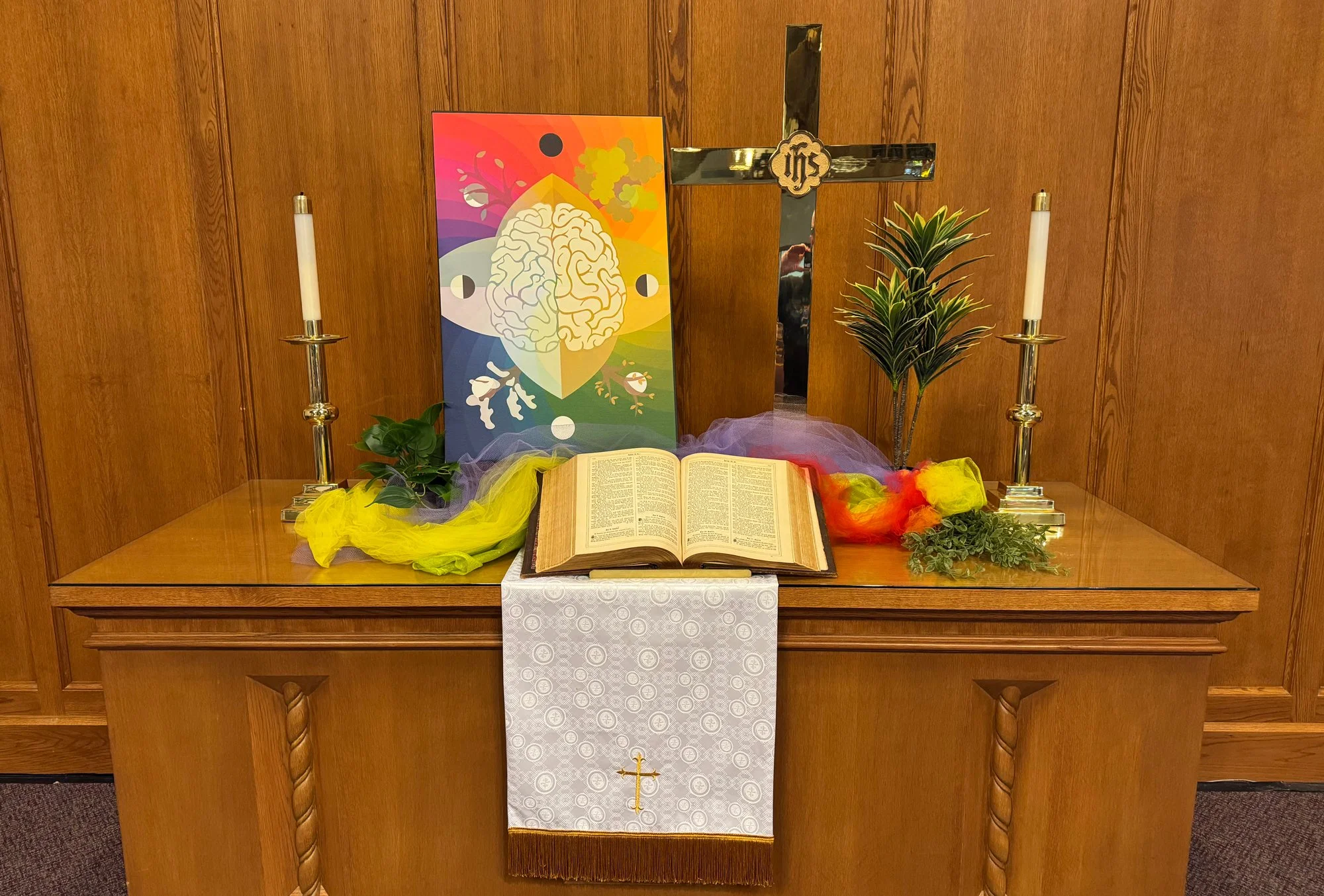
When asked to create a piece for the Mental Health series, Devon said yes without fully considering how to illustrate “mental health.” The process itself became a cerebral experience—one that required setting aside preconceived notions and stereotypes.
During a day in worship—though the specific Sunday is not recalled—Devon found inspiration while looking up at the stained glass above the altar, where an image of color and lifecycle came to mind.
Rather than portraying mental health strictly in terms of illness or wellness, Devon chose to represent it as a cycle of states experienced by all. In the illustration, those states are expressed through the rhythms of the seasons, the phases of the moon, and the progression of daylight.
A digital mixed-media approach was used to build layers of imagery and color.

-
Rob Hahn
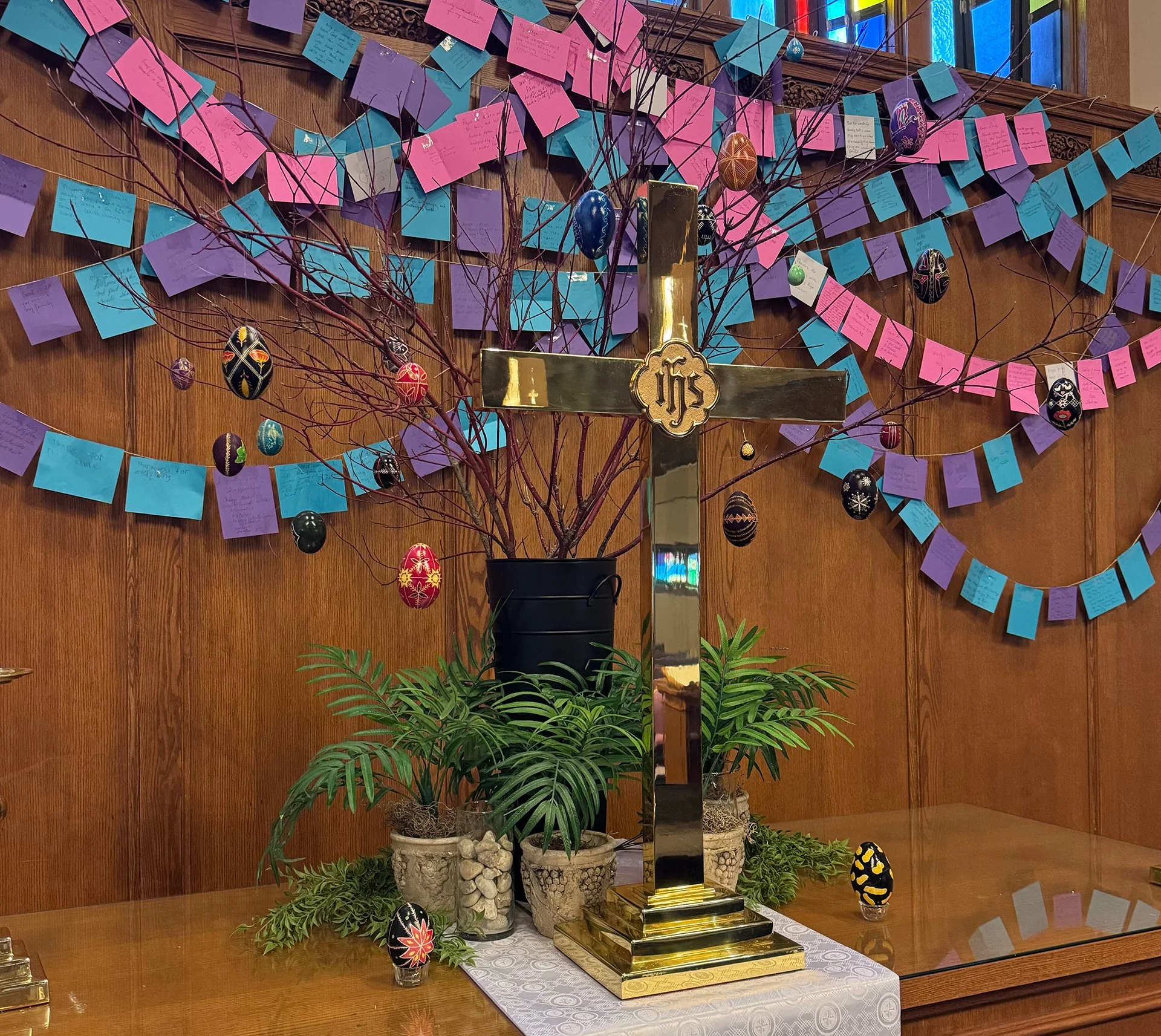
Artist Rob Hahn may be found up in the balcony on any given Sunday, operating the soundboard and slides for worship. One of his favorite pastimes is creating pysanka eggs.
Pysanka is an Eastern European art form in which eggs are decorated with intricate colors and symbols. The name comes from a word meaning “to write.” The process uses a wax-resist method and was traditionally practiced by women, often with customs related to ritual purity. Each town and region developed its own distinct styles.
One legend says the devil is kept at bay as long as pysanky continue to be written.
My interest was sparked when I was a young boy and saw an article in National Geographic. Years later, while living in Racine, I discovered that the art museum offered classes in various disciplines, including pysanka. Bee encouraged me to take one by giving me a gift certificate.


-
Bee Hahn, Mark Runke, Julie White
-
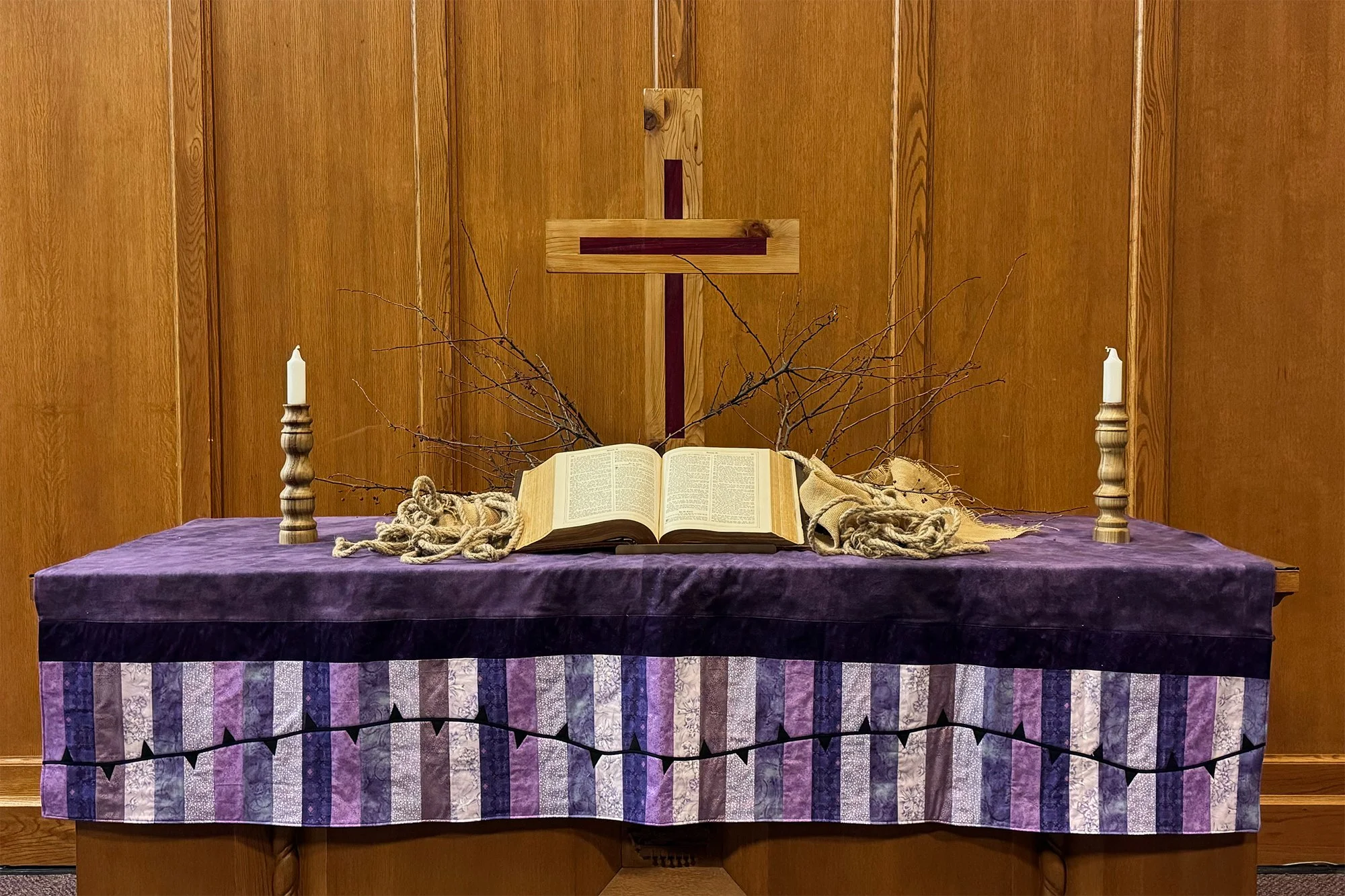
Each Lent, the brass and the Alleluias are removed from the altar, creating a simpler, more contemplative space until Easter morning. When Joanne Tyjeski invited Bee Hahn to turn new wooden candle holders for the season, Bee’s first instinct was hesitation. Known for crafting smaller pieces, Bee questioned whether the task belonged to someone more skilled.
Encouraged by friends to simply try, Bee selected two matching pieces of catalpa wood salvaged from a storm-felled tree that once stood in front of the church. As the second candle holder took shape, a natural worm trail appeared in the grain. Rather than conceal the imperfection, Bee chose to highlight it with red coral inlay. The result: two candle holders that are not identical twins, but cousins—distinct, yet beautifully connected.
As a preacher’s kid, Bee grew up understanding the symbolism of altar candles: Christ’s light present in worship and carried into the world. These handmade pieces quietly reflect that same truth—faithfulness is not about perfection, but about offering what we have with courage.
-
Mark Runke serves as Trinity’s Visitation Minister, a role he considers a true calling and blessing. Outside of ministry, woodworking is both a hobby and a source of renewal. He finds deep satisfaction in shaping raw lumber into something meaningful.
When Joanne learned of his woodworking and asked if he would create a cross for the altar, Mark was surprised and honored. It was the first time he had been invited to craft something so central to worship. Accepting the opportunity, he approached the project with both care and gratitude.
For Mark, creating the altar cross was more than a woodworking project—it was an act of service. Contributing his craftsmanship to Trinity’s worship life reflects his joy in being part of the church’s ministry and mission.
-
Julie White’s Lenten paraments guide worshipers visually through the journey of Christ’s passion and resurrection.
On the altar parament, deep purple represents the gathering darkness surrounding Jesus’ path to the cross. Graduated steps of color trace His walk toward crucifixion, while woven triangles along the base evoke the crown of thorns.
On the pulpit parament, dark purple symbolizes the sealed tomb. Emerging hues of yellow and orange suggest the stone rolled away, the rising sun, and Christ’s ascension—hope breaking through sorrow.
Julie’s artistry is rooted in a lifelong love of sewing, first nurtured by her mother, a gifted seamstress who transformed worn garments into something new. From ironing pillowcases to sewing her first apron and skirt, Julie learned at her mother’s side. Quilting came later, including a special album quilt they created together for Julie’s daughter’s wedding—one of their final shared projects before her mother’s passing.
When Julie begins a new piece, she still hears her mother’s quiet encouragement: “You can do it.” The Lenten paraments were stitched with that same spirit—an offering of memory, faith, and hope woven together.


-
Larry Slinger
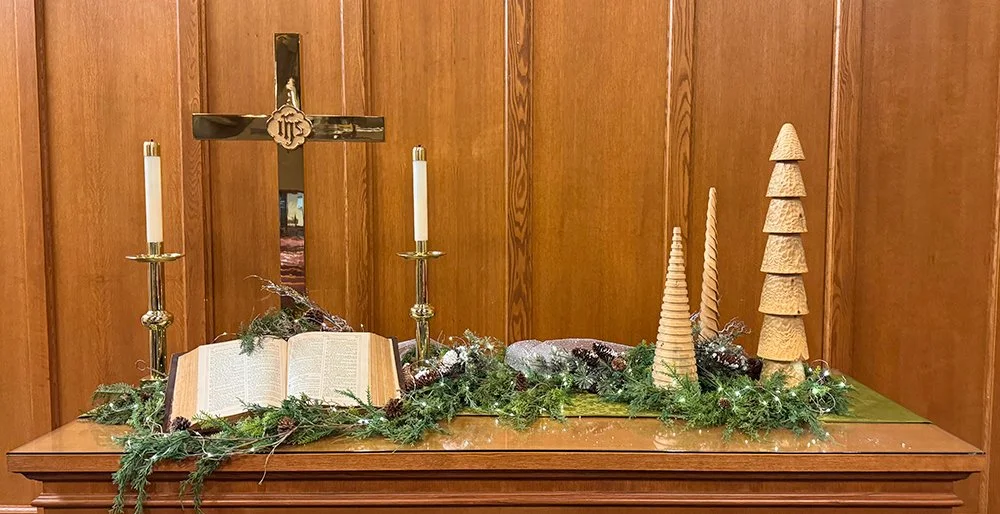
Father of Trinity Church Member, Tracey Burton, Beaver Dam native and member of the Class of 1960, Larry Slinger began wood carving after a chance poolside meeting with a couple of gentlemen while visiting Texas in 2005. His first assignment was to whittle a cowboy boot from a piece of wood one of the men handed him. “Here, take this, see what you can do with it, and bring it back next week.”
That chance encounter sparked a 20-year love of carving wood into a variety of kitchen items, including spoons, bowls, and cutting boards. The three carved trees featured on the altar are made from one of the following woods: pine, mahogany, or basswood.
Now a happy member of the small community of White Lake, WI, Larry accepts commission work upon request, all through word of mouth.

-
Steve Strassmann
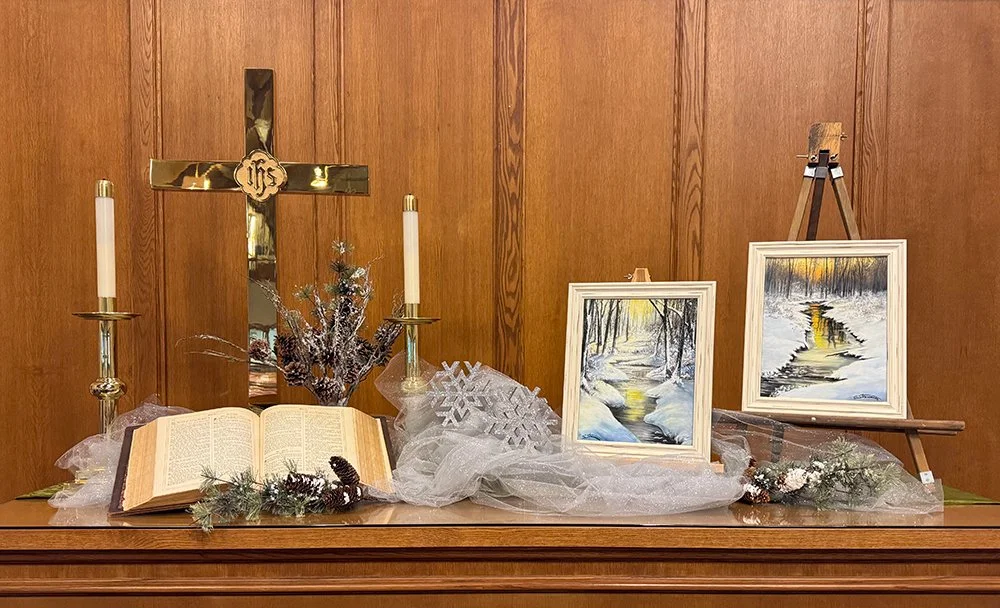
Steve describes oil pastel as a versatile, hands-on medium. Without relying on a brush, he uses his hands and a variety of tools to layer and blend pigments, building depth and texture until the desired result is achieved. He values the freedom to work across a range of surfaces, including textured paper, hardboard, and wood.
Steve is currently showing his work at The Gallery Frame Shop on Main Street in Fond du Lac.

